Keep in touch
Marine and Terrestrial Biodiversity

Nature isn't a backdrop to what we do — it's the reason our hotels exist in the places they do. That's why we've built a Biodiversity Policy that guides everything we do to protect, restore, and reduce our impact on the ecosystems around us, especially in areas of high biodiversity value (Key Biodiversity Areas) like SAii Phi Phi Island Village in Krabi, Thailand, and our CROSSROADS Maldives project.
Targets
- Biodiversity (Shannon) index at CROSSROADS Maldives above 2.5
- Achieve 30% of key biodiversity area protected by 2030
Performances
| 1.71 sq.km. at CROSSROADS Maldives recognised as OECM* Candidate | 20,664 visitors attended the Marine Discovery Centre (MDC) | 24 IUCN Red List marine species found in our area |
| 792 coral fragments planted at Maldives | 1,926 participants in MDC Maldives knowledge-sharing sessions on the marine ecosystem | 2.46 Biodiversity (Shannon) index from survey at CROSSROADS |
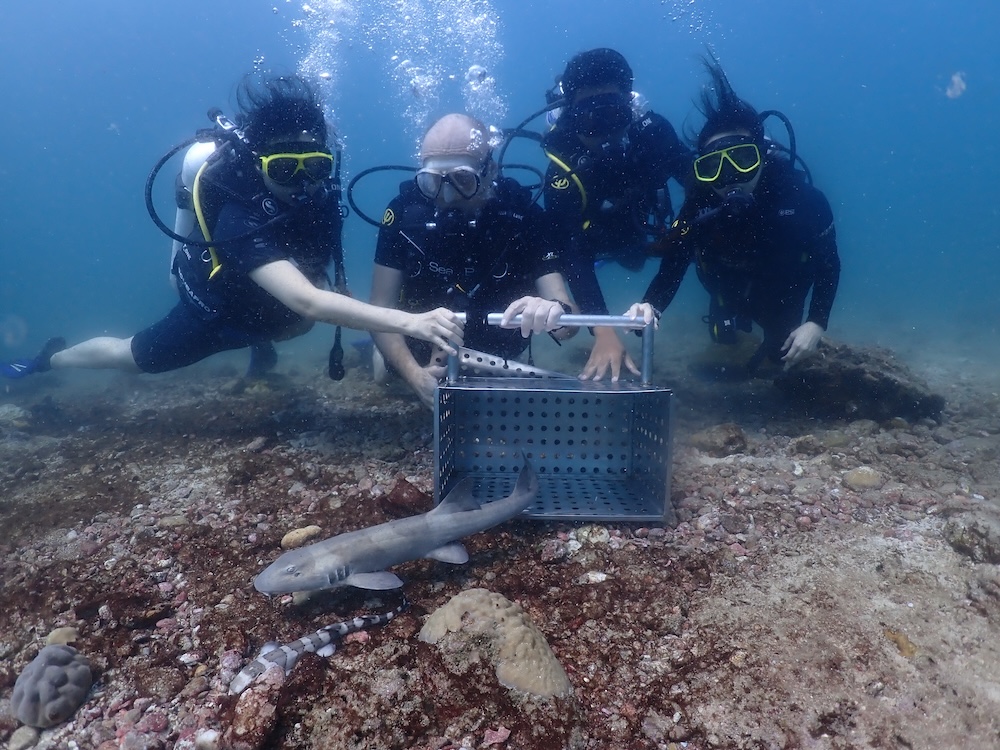
| 42 Bamboo sharks released under the SOS project since 2021 |
Business Opportunities & Risk
Our biodiversity work opens real doors. It drives sustainable tourism, builds trust with investors and local communities, and creates meaningful collaboration with government agencies and private partners on restoring marine ecosystems.
We also keep a clear eye on the risks. Climate-related pressures like coral bleaching, severe storms, and marine debris are real, and we take them seriously. Addressing them proactively is part of how we protect both nature and our reputation.
How We Manage Biodiversity
- Policy & Guidelines: Our Biodiversity Policy guides all operations under the principle of "Building Big, Protecting Small" — committing us to protect, preserve, and restore biodiversity across every place we operate.
- Assessment & Risk Management: We assess biodiversity impacts at every stage of project development — before construction begins and throughout operations — so we can spot and address risks early.
- Conservation Planning: We develop and regularly monitor marine and terrestrial conservation plans to keep ecosystems healthy and intact.
- Invasive Species Control: We have a strict no invasive species policy to protect the ecological balance of every location we operate in.
- Collaboration & Engagement: We work closely with contractors, local communities, academic institutions, government agencies, and private sector partners — because conservation is always better together.
Key Action in Key Biodiversity Areas
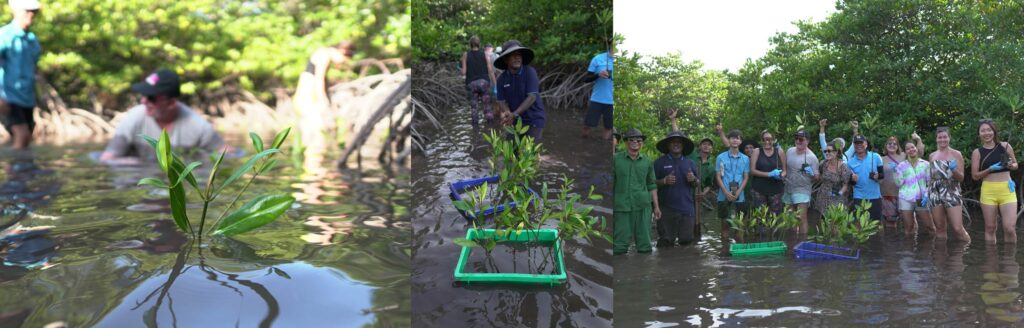
SHR is committed to protecting and preserving nature through proactive actions in Key Biodiversity Areas (KBAs) with high ecological significance. This approach focuses on establishing conservation areas, fostering collaboration with government agencies and local communities, and supporting research and education on biodiversity. These efforts range from advancing marine conservation areas at CROSSROADS Maldives to mangrove conservation in Loh Ba Gao Bay, Phi Phi Island, as well as developing Nature Trails across our properties to engage guests in learning about and appreciating local ecosystems—ultimately contributing to long-term sustainable conservation.
Save Our Sharks (SOS)
The Save Our Sharks project is one of the things we're most proud of. A collaboration between SHR, Singha Estate, and the Phuket Marine Biological Center (PMBC), supported by government agencies, it focuses on conserving rare marine species — especially bamboo sharks.
At SAii Phi Phi Island Village, we operate the only shark nursery centre on Phi Phi Island — our Marine Discovery Centre (MDC), which follows strict scientific protocols for breeding and release. Through education, awareness activities, and a clear "Do & Don't" guide for guests, we're helping people understand why sharks matter. We've also prohibited shark meat from being served in any SHR hotel.
The project protects marine biodiversity, supports local fishing communities, and helps rescue injured marine life. This is conservation in action, every single day.
Research & Development on Marine Biodiversity
In 2025, our team at CROSSROADS Maldives developed and submitted the OECMs Management Plan 2025–2030 and an Ecological Report to the Ministry of Tourism and Environment. This work draws on rigorous ecological assessments, biodiversity surveys, and systematic marine data collection — all designed to support evidence-based conservation planning within our designated 3.15 km² Key Biodiversity Area.
A key part of this plan is a spatial zoning framework to protect coral reefs, lagoon ecosystems, and dolphin movement corridors. It brings together scientific research, sustainable tourism practices, pollution control, and stakeholder engagement — all aligned with national and international conservation standards.
Our ecological survey covered approximately 1.71 km² of reef-lagoon habitats around Emboodhoo Lagoon, Kaafu Atoll — including reef flats, reef slopes, coral bommies, and transition zones. We identified three sites of high conservation value, with strong live coral cover, stable substrates, and rich marine communities. The area supports at least 24 IUCN Red List species, including sharks, rays, sea turtles, and large dolphin pods. This survey gives us a robust scientific baseline to track ecological health and strengthens the case for this area's recognition as an OECM Candidate.
Terrestrial Biodiversity
We take terrestrial biodiversity seriously across every hotel we operate. At CROSSROADS Maldives, we work hand-in-hand with contractors, government agencies, and the EPA to ensure only native, non-invasive plant species are introduced — all sourced from authorised nurseries, with construction materials from government-approved sources. Harmful practices that could threaten natural habitats are simply not an option for us.
Across Thailand, we hold the same standards: no invasive plants, strict adherence to National Park regulations, and responsible pest management that keeps exotic species out.
But we go beyond compliance. We actively partner with conservation organisations — including Singha Estate, the Green World Foundation, the Loh Bagao community on Phi Phi Islands, and university research centres in marine science and biodiversity — to support ecosystem protection, research, and environmental education.
One highlight of this work is our Nature Trail project at Santiburi Koh Samui and SAii Phi Phi Island Village, where guests can explore diverse ecosystems, discover native species, and connect with the natural world around them. Because we believe the best travel leaves nature better than it found it.
Other Marine Conservation Collaborations
Maldives Islamic Bank — Coral Conservation
In 2025, we initiated a partnership with Maldives Islamic Bank (MIB) to support coral reef rehabilitation and biodiversity conservation at CROSSROADS Maldives. After MIB's CEO visited our Marine Discovery Centre and Coral Protected Area, both organisations formalised the relationship through an MoU focused on coral reef protection, restoration, and sustainability. It's a great example of how the private sector can come together to make a real difference for marine conservation.
Coral Propagation with National Geographic Group
We hosted a coral propagation and marine conservation awareness activity for the National Geographic Group at CROSSROADS Maldives. Participants learned about coral reef ecology, the threats reefs face, and hands-on restoration techniques — connecting one of the world's most recognised voices in nature storytelling with the work we do every day.
Endangered Species Capacity Building in Thailand
Marine conservation representatives from the Maldives joined an endangered species capacity-building programme at the Marine and Coastal Resources Research Centre in Thailand (15–20 July 2025). The training covered UAV monitoring, sea turtle rescue and rehabilitation, and cetacean identification — building technical capacity and strengthening international collaboration in species protection.
Atoll Marine Conservation Centre — Turtle Rescue Collaboration
Our marine biologists visited the Atoll Marine Conservation Centre in Naifaru to study turtle rescue and rehabilitation operations and exchange expertise. With turtle rescue cases in Emboodhoo Lagoon on the rise, this visit is part of our exploration into establishing a dedicated turtle rescue centre at CROSSROADS Maldives.
Passive Acoustic Monitoring for Coral Reef Restoration
Our marine biologists at CROSSROADS Maldives participated in a Passive Acoustic Monitoring workshop organised by the EPA, in collaboration with MMRI and MNU. The programme introduced acoustic techniques for assessing reef health and supporting coral reef restoration — adding another scientific tool to our conservation toolkit.
Learn more in our Sustainability Report, under the “Biodiversity” section.

S Hotels & Resorts Public Company Limited
123 Suntowers Building B, 10th Floor, Vibhavadi-Rangsit Rd., Chom Phon, Chatuchak, Bangkok 10900 Thailand
T: +66 (0) 2058 9888 | E: contactus@shotelsresorts.com