S Hotels and Resorts
Greenhouse Gases and Climate Change

At SHR, we recognise climate change as a key business priority and an integral part of our sustainability strategy. We are committed to reducing greenhouse gas emissions while strengthening the resilience of our operations to climate-related impacts. Through continuous improvements in energy efficiency, renewable energy, water management, and climate adaptation, we aim to create long-term value for our guests, communities, investors, and other stakeholders while supporting the transition to a low-carbon tourism industry.
We have been a member of Green Globe since 2022, reflecting our commitment to internationally recognised sustainable tourism standards, covering environmental management including energy, water, waste, and carbon-related criteria. This membership provides access to sustainability guidance and industry best practices relevant to our hotel operations.
Targets
- Reduce greenhouse gas emissions (Scope 1 & 2) by 1% in 2025 compared with the base year 2024
- Reduce greenhouse gas emissions intensity by 10% in 2035 compared with the base year 2025
- Achieve Net Zero by 2050
Performance
- GHG emissions increased by 6.1% compared with 2024
| Carbon Emission (tCO2) | ||
| Scope 1 24,924 | Scope 2 6,802 | Scope 3 3,499 |
Business Opportunities and Risks
Climate change presents both risks and opportunities that may affect our operations, financial performance, and long-term business resilience.
Opportunities
The transition to a low-carbon economy creates opportunities for us to improve operational efficiency through energy and water conservation, renewable energy adoption, and resource optimisation. Growing demand for sustainable tourism also enables us to enhance guest experiences, strengthen our competitive advantage, and build stronger relationships with environmentally conscious guests, investors, suppliers, and business partners.
Risks
We face both physical and transition climate-related risks. Physical risks include extreme weather events, rising temperatures, water scarcity, flooding, coastal erosion, and biodiversity loss, which may disrupt hotel operations, damage assets, affect guest experiences, and increase operating costs. Transition risks include evolving climate regulations, carbon pricing mechanisms, increasing energy costs, and changing stakeholder expectations, which may influence operating costs, investment decisions, and business competitiveness.
Climate Risk Management
We integrate climate-related risks into our Enterprise Risk Management (ERM) framework to identify, assess, monitor, and manage both physical and transition risks that may affect our operations, assets, supply chain, and long-term business resilience.
Our climate risk assessment considers the likelihood and potential impacts of climate-related events, including extreme weather, water scarcity, coastal erosion, regulatory developments, carbon pricing, and changing stakeholder expectations. The assessment enables us to prioritise mitigation and adaptation measures, strengthen business continuity, and support informed decision-making across our operations.
Climate-related risks are monitored regularly through defined risk indicators and management processes. Assessment results are incorporated into operational planning, investment decisions, and capital allocation to improve the resilience of our hotel portfolio. We also review our climate risk management approach periodically to ensure it remains responsive to evolving climate conditions, regulatory requirements, and stakeholder expectations.
Climate Change Adaptation Initiatives
The Company emphasizes climate resilience as part of its sustainability strategy, integrating adaptation into hotel management and operational planning. Climate adaptation is considered alongside mitigation efforts to ensure long-term environmental and business sustainability. Through these initiatives, the Company has implemented targeted actions, including:
- Upgrading energy-saving and water management systems to improve operational efficiency and reduce vulnerability to climate-related disruptions.
- Enhancing water storage capacity to ensure a reliable supply during periods of water scarcity and drought.
- Protecting coastal and natural areas to mitigate risks from erosion, flooding, and extreme weather events.
- Conducting employee training and awareness programs on climate risks to equip staff with the knowledge and skills needed to implement adaptation measures effectively.
- Conducting biodiversity surveys to monitor and preserve local ecosystems, strengthening ecological resilience against climate impacts.
Decarbonization Strategy
| Time Horizon | Key Actions |
| Short-term2025-2030 | Focus on improving day-to-day operational efficiency and building a strong foundation for decarbonization by implementing energy-saving measures, strengthening energy monitoring and management systems, reducing waste and food waste, and minimizing business travel through greater use of digital meetings and also supported carbon absorption initiatives, such as reforestation. |
| Medium-term2031-2040 | Support the transition to lower-carbon operations by working with suppliers on sustainable food and beverage sourcing and gradually upgrading equipment to lower-carbon technologies. This includes installing air-conditioning systems with low-global-warming-potential (GWP) refrigerants and introducing more energy- and water-efficient technologies in in-house laundry operations. |
| Long-term2041-2050 | Continue reducing emissions by increasing the use of renewable energy and adopting low-carbon technologies across hotel operations, in line with long-term climate goals. |
Reforestation Project
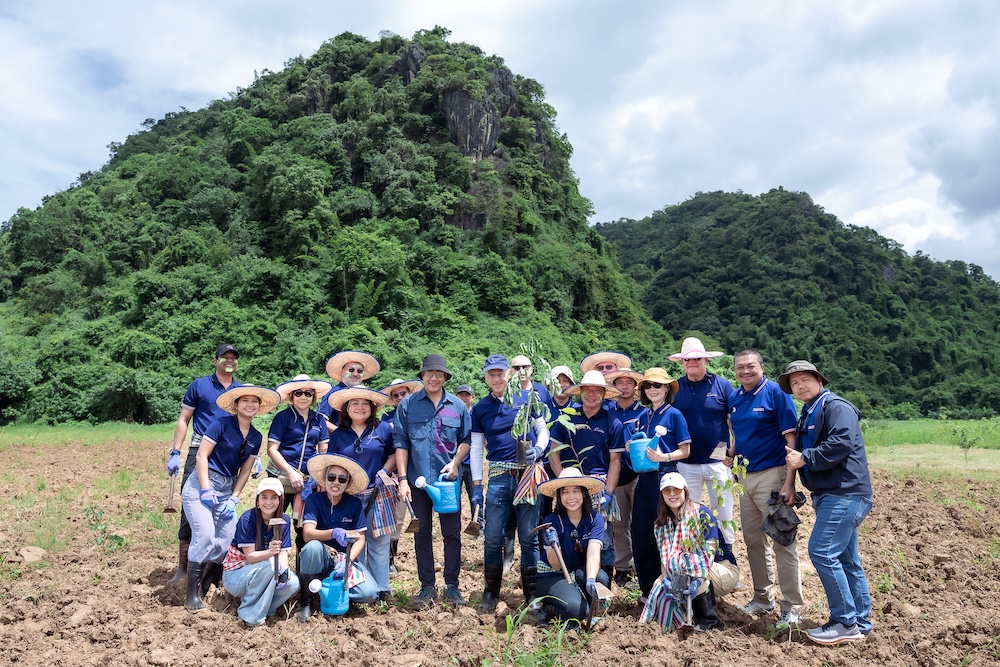
The Company supports forest restoration and conservation initiatives, including the “Millions Trees for Tomorrow” project at Singha Park, Chiang Rai. The project aims to establish 1 million square meters of forest area, while supporting biodiversity conservation, ecosystem restoration and the potential for carbon sequestration. These initiatives form part of the Company’s broader long-term efforts toward Net Zero by 2050, alongside continued efforts to reduce GHG emissions across the Company’s operations and value chain.

S Hotels & Resorts Public Company Limited
123 Suntowers Building B, 10th Floor, Vibhavadi-Rangsit Rd., Chom Phon, Chatuchak, Bangkok 10900 Thailand
T: +66 (0) 2058 9888 | E: contactus@shotelsresorts.com