Keep in touch
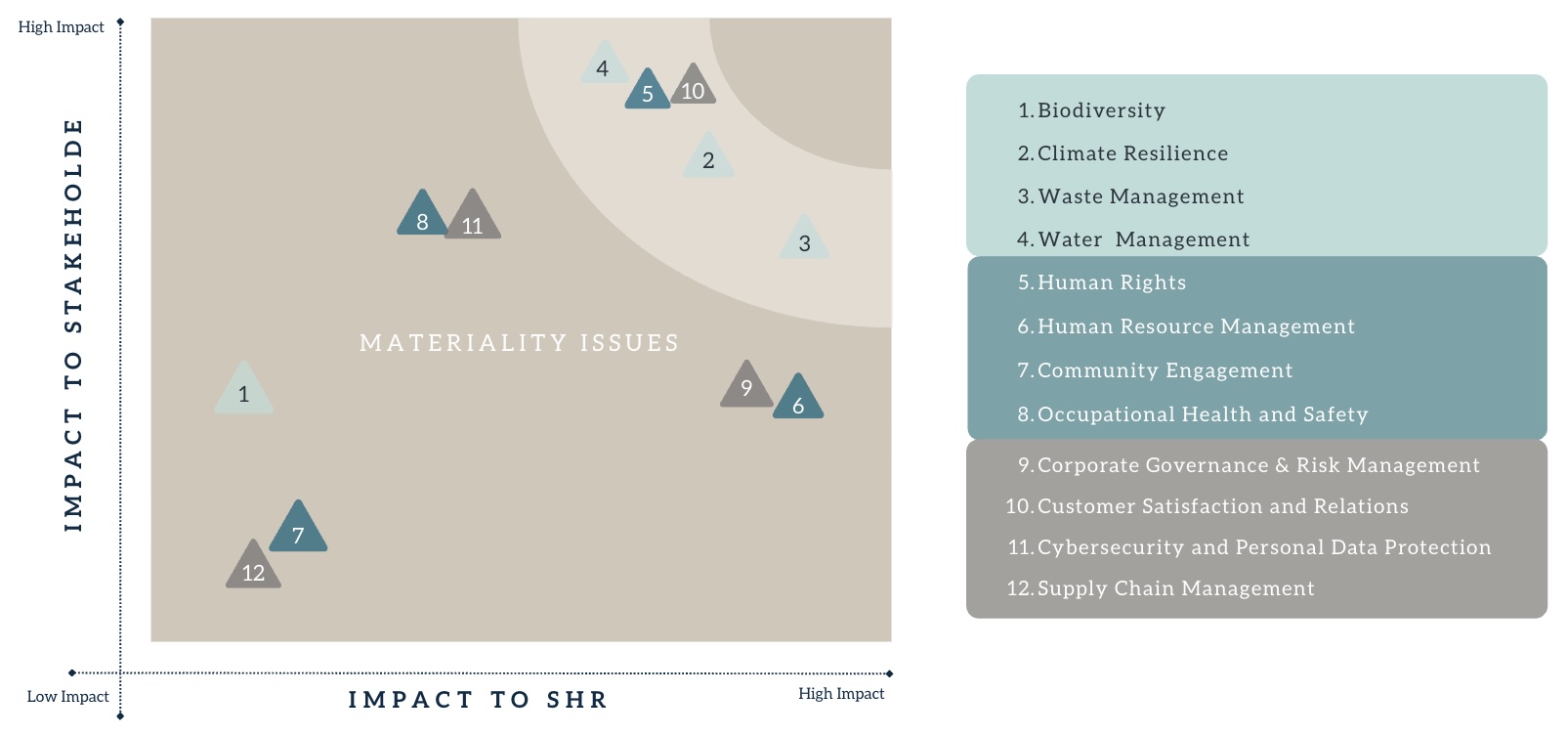
SHR’s Materiality Issue

Defining Material Issue
To ensure that the Sustainability Development Report reflects the most relevant and significant issues, the company implements a structured materiality assessment process. This process involves identifying, prioritising, and validating key sustainability topics that represent both the company’s significant impacts and the issues most relevant to stakeholders. It draws upon globally recognised reporting frameworks and sustainability principles, such as the GRI Standard, to guide the assessment of economic, environmental, social, and governance dimensions. Through this approach, the company aims to enhance the accuracy, transparency, and relevance of its sustainability disclosures, ensuring alignment with international best practices and stakeholder expectations.
1
Identification of
Sustainability Issues
2
Stakeholder
Engagement and Issue
Gathering
3
Prioritization of
Material Topics
4
Validation and
Approval
The company analysed and reviewed the sustainability context across the entire business value chain, including potential financial and non-financial impacts and the evolving social and environmental scenarios, such as climate change. National and international standards, guidelines, and sustainable development frameworks were considered for the company's operations following: Global Reporting Initiative (GRI) Standards, International Financial Reporting Standards (IFRS) S2: Climate-related Disclosures, United Nations Sustainable Development Goals (SDGs), Stock Exchange of Thailand ESG Rating (SET ESG Rating), FTSE Russell ESG Rating, Green Globe Certification, Event Industry Council (EIC) Sustainable Event Standards, S Hotels and Resorts Public Company Limited Sustainability Philosophy and Policy
In addition to adopting recognised sustainability standards, the company actively gathers feedback and expectations from stakeholders through various channels, including communications from relevant departments, executive meetings, and surveys conducted with all stakeholder groups. This input helps enhance sustainability initiatives and strengthen the transparency and comprehensiveness of the company’s disclosures.
The company reviewed the existing Sustainability Materiality Matrix in collaboration with senior management to reassess the materiality of issues. This process considers the influence of stakeholders.
Significant sustainability issues and reports were presented to the Chief Executive Officer (CEO) and the Corporate Governance and Sustainability Development Committee (CG&SD) for validation and approval. This ensures that the identified material topics accurately reflect stakeholder priorities and align with the company’s sustainability strategy and reporting framework.

S Hotels & Resorts Public Company Limited
123 Suntowers Building B, 10th Floor, Vibhavadi-Rangsit Rd., Chom Phon, Chatuchak, Bangkok 10900 Thailand
T: +66 (0) 2058 9888 | E: contactus@shotelsresorts.com