S Hotels and Resorts
Supply Chain Management

SHR is committed to managing its supply chain in Thailand and globally, responsibly and sustainably, alongside proactive risk management and continuous development opportunities. The Company takes into account the impacts on stakeholders, society, and the environment, while promoting good governance, transparency, and ethical business conduct. This approach aims to ensure long-term business resilience and create sustainable value
| Target | Performance |
| · 100% of suppliers received communication on the Anti-Corruption Policy and Supplier Code of Conduct. · 100% of suppliers were assessed for sustainability risks covering Environmental, Social, and Governance (ESG) aspects. · Zero complaints related to violations of the Supplier Code of Conduct. | · 100% of suppliers received communication of the anti-fraud and corruption policy and supplier code of conduct. · Zero complaints related to violations of the Supplier Code of Conduct · No suppliers were identified as having high sustainability risk. · ESG on-site audit was conducted for 1 key supplier. |
Business Opportunities & Risk
Managing our supply chain well means being ready for whatever comes — and turning challenges into opportunities. We integrate risk management into our supply chain processes so that disruptions, regulatory shifts, and rising ESG expectations from customers and investors don't catch us off guard. Instead, they push us to work more closely with our suppliers, source more responsibly, and use resources more efficiently — all of which make us a stronger, more trusted business in the long run.
Responsible Sourcing
We want every purchasing decision to reflect our values. Our procurement policy ensures that environmental and social considerations are part of how we source — not an afterthought. We prioritise eco-friendly, sustainable, and locally sourced products, especially food and raw materials that support farm-to-table concepts and create jobs in local communities. Every decision is made on the basis of suitability and value, and we hold firm on avoiding conflicts of interest across all sourcing activities.
In 2025, 5 million THB went to locally F&B products — a reflection of our commitment to supporting local communities and reducing supply chain emissions.
Supplier Code of Conduct
Our suppliers are partners in how we show up in the world, so we ask a lot of them — in the best possible way. Every supplier is required to understand and uphold our Supplier Code of Conduct and all relevant company policies. These aren't just rules; they're a shared commitment to doing business responsibly, transparently, and fairly — balancing economic performance with genuine social and environmental care.
We manage supplier risks through regular assessments of compliance with our Code of Conduct and conduct evaluations both before and after entering business relationships. These cover the issues that matter most to us:
- Energy Management: We encourage suppliers to implement energy efficiency measures, track their energy use, and disclose GHG emissions — because a greener supply chain starts with shared accountability.
- Water Management: Suppliers are encouraged to use water responsibly and prevent environmental harm, including biodiversity impacts linked to water use.
- Labour & Human Rights: All suppliers must comply with our Code of Conduct on child labour, forced labour, non-discrimination, freedom of association, collective bargaining, fair wages, health and safety, and working hours. We monitor compliance through audits, training, and corrective actions.
- Environmental Standards: Suppliers must manage waste, pollution, and resource use responsibly. Environmental expectations are built into supplier contracts and buyer training from the start.
- Biodiversity: We encourage suppliers to understand and manage their biodiversity impacts — because protecting nature is a responsibility we share across our entire value chain.
In addition, the Company performs ESG due diligence prior to engaging in transactions. This process covers potential impacts related to sustainable development, community and environmental balance, safety and occupational health, working conditions, fair labor practices, respect for human rights, and the prevention of conflicts of interest, among other relevant considerations.
How We Identify Key Suppliers
We classify our key suppliers into two groups — because not all supplier relationships carry the same weight.
Critical Tier 1 Suppliers are essential to our core operations. To qualify, a supplier must meet all three of the following:
- Provide hotel-standard products or services
- Have an annual procurement value exceeding THB 3 million
- Supply products or services that cannot easily be substituted in the short term, or are significantly important to our core operations
Key Suppliers are those who play an important role in advancing our sustainability goals.
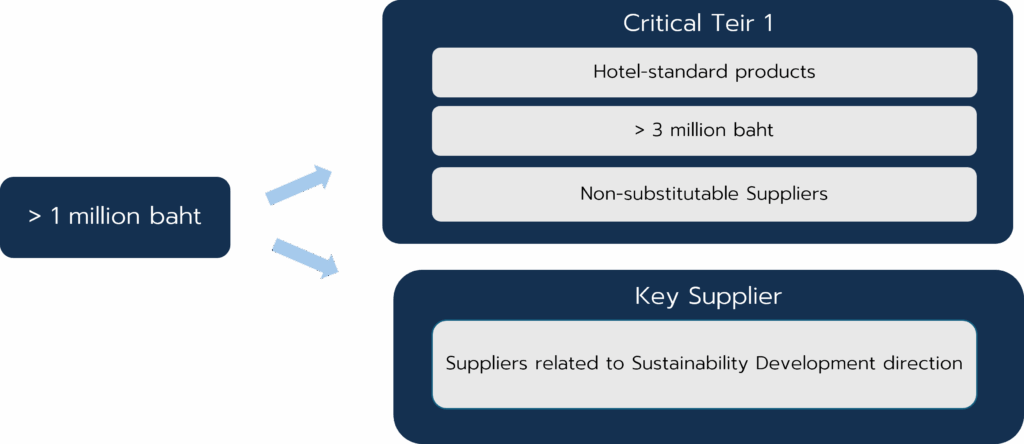
In 2025, we identified 4 Critical Tier 1 suppliers and 4 Key Suppliers — each playing a meaningful role in how we deliver on our sustainability commitments.
Supplier Sustainability Risk Assessment
We assess sustainability risks across our supply chain to understand where ESG impacts — environmental, social, and governance — could affect business continuity or the trust of those around us. We look closely at regulatory compliance, environmental performance, labour practices, human rights, health and safety, and ethical conduct.
ESG audits are a key part of this process. They help us verify how our suppliers actually operate, gauge risk levels, and identify where improvement is needed. When issues arise, we work through them together — whether that means a corrective action plan, guidance and development support, or, where necessary, a review of the business relationship.
In 2025, no suppliers were identified as having high sustainability risk. We also completed an ESG on-site audit for one key supplier as part of our ongoing risk assessment process.
Building Our Partners' Capabilities
We don't just expect our partners to meet our standards — we actively help them get there. We see capability building as a two-way investment: when our suppliers are stronger on sustainability, so are we.
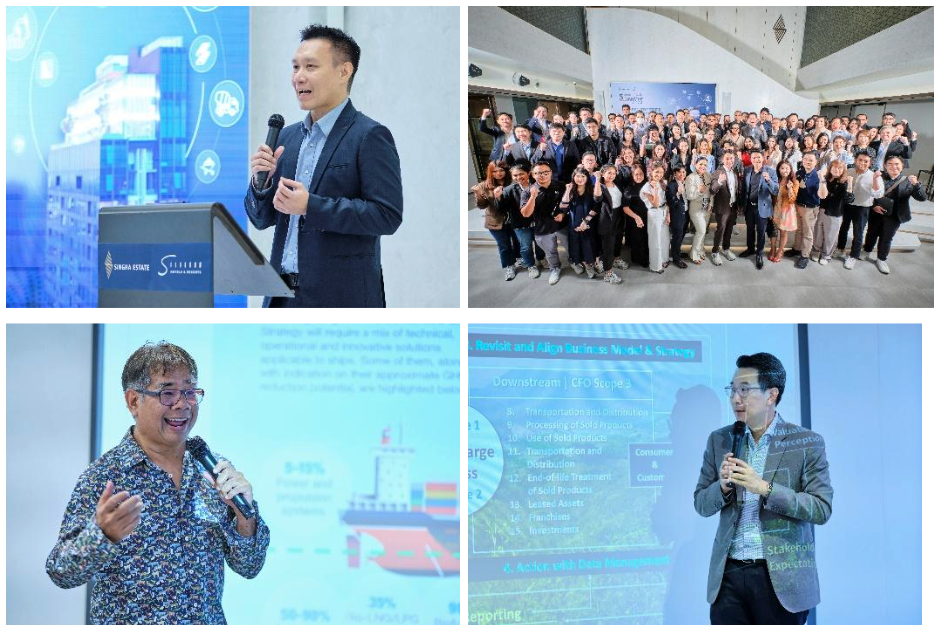
Through regular communication, engagement activities, and knowledge-sharing platforms, we provide guidance on the topics that matter: climate change, national climate targets, human rights, fair labour practices, health and safety, and inclusive growth. These conversations aren't just about compliance — they're about building a shared vision for responsible business across our entire value chain.
By fostering open dialogue and genuine collaboration, we're working to build a supply chain that's resilient, ethical, and ready for the future.
Supplier Credit Management Policy
The Company emphasizes transparent and fair business practices with suppliers, ensuring business growth together. The Company typically manages liquidity within a 30–60 day credit period, with exceptions for special cases requiring extended periods.
| Average Credit Term | |||
| 2022 | 2023 | 2024 | 2025 |
| 35 Days | 35 Days | 40 Days | 42 Days |

S Hotels & Resorts Public Company Limited
123 Suntowers Building B, 10th Floor, Vibhavadi-Rangsit Rd., Chom Phon, Chatuchak, Bangkok 10900 Thailand
T: +66 (0) 2058 9888 | E: contactus@shotelsresorts.com